
Why Cobudget matters
By
Francesca Pick
… and why our global challenges require us to change how we organize
How can we shift the ways in which power and money flow within groups, organizations, society? How do we bring more transparency and deeply integrate the voices of beneficiaries into granting processes? What practices and tools are needed to help us all become active participants in decisions around money and resources–be that in our cities, workplaces or communities?
These questions have been around for a long time, and many communities have been developing and experimenting with collaborative funding practices and tools in search of answers. One of these is Cobudget. We believe that Cobudget’s infrastructure and practices are essential for growing the healthy (organizing) systems we feel our world so deeply needs right now. And when connected to and supported by a thriving open source ecosystem for collaborative funding and beyond, we see unbounded potential for impact.
A brief history of Cobudget
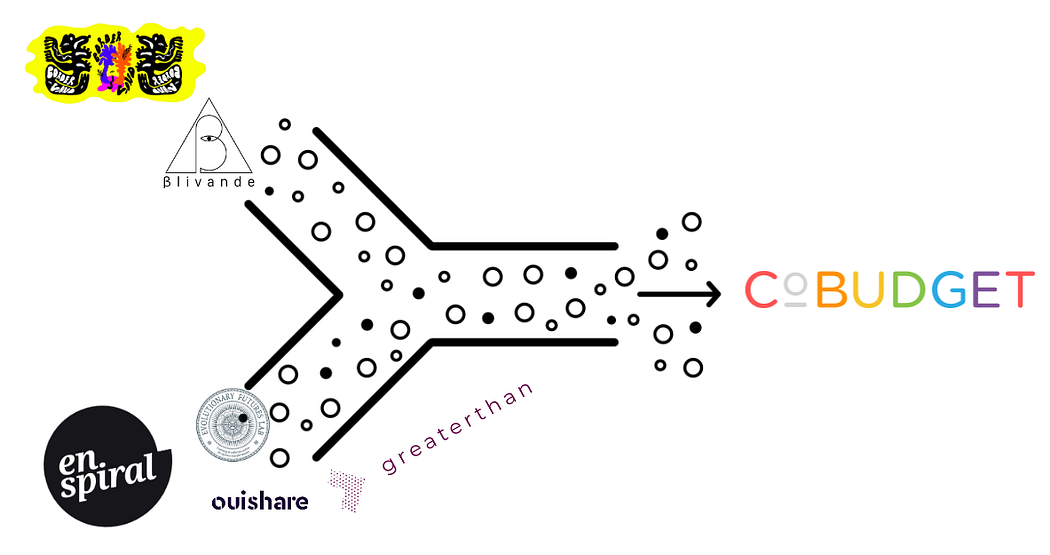
Cobudget’s origins go back to the early 2010s, when two different self-organized communities began, independently from each other, experimenting with collaborative funding: the Enspiral Network from Aotearoa New Zealand, and The Borderland community from Scandinavia. Thanks to the initiative, drive and technical skills of a handful of members of both those communities, their experimentation and lived experiences with collaborative funding practices were codified, evolving rapidly from spreadsheets to software prototypes. This led to the creation of two different tools around 2014, on opposite sides of the globe: Cobudget and Dreams. Years of practicing ‘cobudgeting’ and multiple prototypes later, several Enspiral members and I started a new venture — Greaterthan — to explore what still felt like the hugely untapped potential of Cobudget. In 2017, we took on the development of the open source tool, with the goal to grow this essential infrastructure and set of practices for collaborative leadership and governance. At the same time, the community-run Dreams platform kept evolving and growing, quickly becoming a hallmark of the Borderland event, enabling the participatory allocation of resources towards art installations and projects brought to the event.
To hear a live account of these two origin stories in more detail, check out the below video by Hugi Ásgeirsson (Dreams) and Francesca Pick (Cobudget) telling those stories.
When Hugi and I met in 2021, we realized we shared a common mission to spread collaborative funding practices and experiment with new approaches to building technology. For several years, we developed the technology alongside each other, making significant upgrades and improvements to Cobudget.
The path ahead
Cobudget has never been about the technology itself, but about encoding long-standing practices that have already been incubated, evolved and matured by communities. The power of the tech is that it allows those matured practices to spread and easily take root in other contexts.
The context in which we have seen collaborative funding practices thrive over the years, have been vast. These span from networked organizations and professional networks who want to enable their members to decide and track the spending of collective funds, to granting bodies looking to make submission and granting processes transparent, to co-working and co-living communities crowdsourcing ideas and pooling money towards them.
The spread of collaborative funding practices to the groups that need them most is why we do this work — which in turn has shaped a pricing strategy that aims to make the tool as accessible as possible. In the upcoming months we will be focusing on awareness, education and capacity building, including offering participatory events to co-design your own Cobudget rounds, and hosting full Cobudget experiences as part of large virtual events. The knowledge gained through this hands-on experience will be continuously integrated back into the software, to best serve the communities this infrastructure is for.
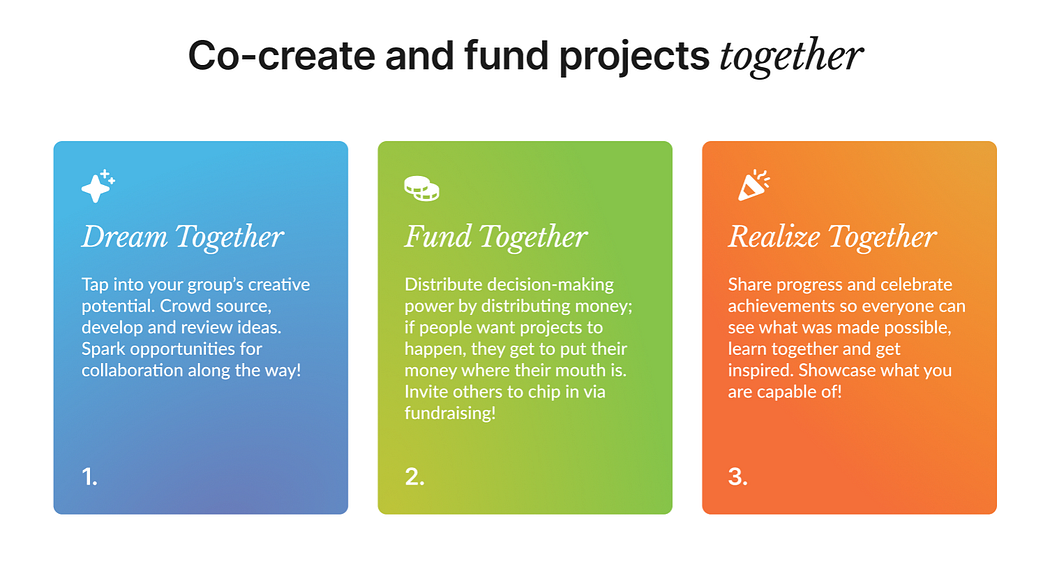
As we discover and uncover needs, our current approach is for Cobudget not to necessarily expand to address them all, but rather to develop alongside other initiatives as one highly connected piece of a larger ecosystem for collaborative funding and beyond. Common Ground's offerings provide a complementary piece of providing education, training and capacity building for groups setting up collaborative funding processes.
We hope that this is just the start of many collaborations of this type, and that we will meet many new allies (you?). We might even find along the way that we can develop the equivalent of a fully functioning “real world” DAO (decentralized autonomous organization), without the need of a blockchain? Whether that happens or not, we are convinced that an ecosystemic, open source approach is an important path to creating digital commons that are truly greater than the sum of their parts.
A word of THANKS
Cobudget is a real testament to what is possible when communities come together to innovate. We cannot say thank you enough to the many humans who helped it become what it is today, thanks to their many contributions, large and small. As the new Cobudget team, we feel privileged to be able to work on something that so much love and care has gone into over the years, and are committed to honoring its past as we take it forward.
We hope to continue building on this rich bouquet of contributions, and encourage you to get in touch if you resonate with our work and see yourself or your organization contributing a pebble, stone or brick to the path we are paving.
Other Resources

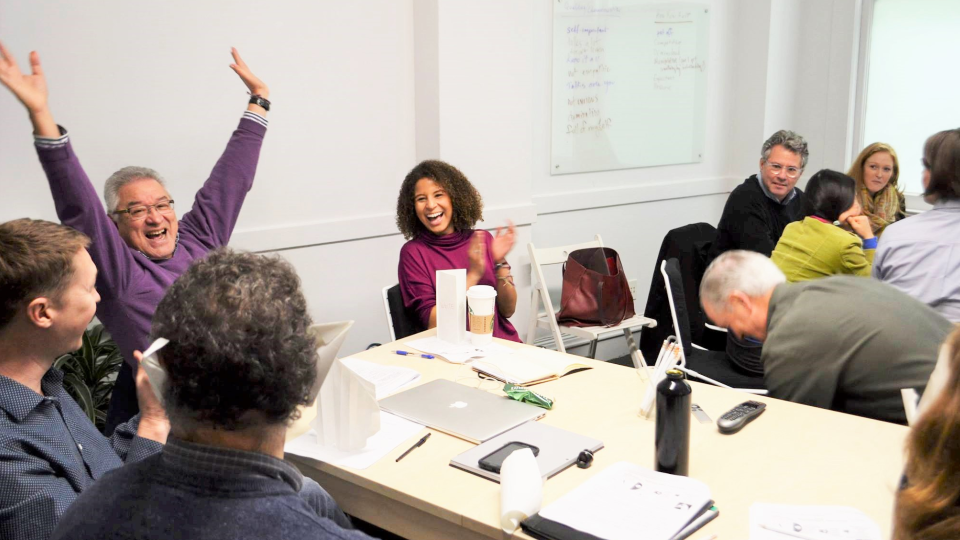

Bring people, ideas and money together, encouraging participation at every stage.